
What Is the 3-3-3 Rule for Flights? Complete Breakdown
If you’ve ever sat on a parked plane for hours with no clear answers, you’ve probably asked: What is the 3-3-3 rule for flights? It’s a US passenger protection regulation designed to stop airlines from holding you on a tarmac indefinitely. Most travelers don’t realize it applies to every US carrier, no matter where your flight departs or lands.
Knowing these rules can save you from hours of unnecessary stress and missed connections.
The rule sets a hard 3-hour limit for domestic US flights stuck on the tarmac, per US Department of Transportation (DOT) requirements as of 2026. Airlines must let you off the plane once that threshold hits, barring safety or air traffic control exceptions. We’ll break down exactly what counts, what airlines owe you, and what to do if they break the rules.

Image source: Bing (Web (fair-use with source credit))
Quick Answer
The 3-3-3 rule for flights is a US DOT tarmac delay regulation. It limits domestic US flight tarmac holds to 3 hours maximum. International US carrier flights have a 4-hour tarmac limit.
Airlines must release passengers once the threshold is met. Exceptions apply for safety, security, or air traffic control issues.
Why Getting the 3-3-3 Flight Rule Right Actually Matters
Wrong information about the 3-3-3 rule leads to real, avoidable harm for travelers. Many people mix it up with the EU261 compensation rule, which offers cash payouts for long delays but doesn’t set tarmac hold limits. If you think the rule applies to gate delays or non-US carriers, you might waste hours stuck on a plane with no way to file a valid complaint.
In 2023, the DOT received 1,247 tarmac delay violation complaints from passengers who didn’t know their rights. Per US DOT enforcement rules, airlines face up to $27,500 in civil penalties per passenger for violating tarmac delay limits. The 3-3-3 flight rule is also often confused with the unrelated 3-3-3 child behavior guideline for managing kids’ conduct.
For more family travel guidance, see travel tips for parents. If you’re traveling with kids, an extended tarmac hold can derail entire vacation plans, so brushing up on family travel guidance first can save you major headaches later.
Extended tarmac holds also pose real health and safety risks, especially for elderly passengers, infants, and people with chronic medical conditions. Dehydration, heat stroke, and panic attacks are common during unplanned holds, which is why the rule mandates access to water and medical care. If a tarmac delay causes you to miss a connecting flight or cancel your trip entirely, you may be eligible for a refund under your airline’s contract of carriage, but the 3-3-3 rule itself does not mandate refunds.
US DOT Aviation Consumer Protection rules confirm the 3-3-3 rule applies to all US carriers operating any global route, plus foreign carriers at US airports.
Quick Breakdown of the US 3-3-3 Tarmac Delay Rule
The nickname “3-3-3 rule” isn’t an official DOT term. It’s a colloquial label for three core requirements: a 3-hour tarmac limit for domestic US flights, 30-minute status updates during delays, and mandatory basic amenities for passengers. International flights operated by US carriers have a 4-hour tarmac limit, a detail many travelers miss when they only hear the “3-hour” talking point.
The rule does not require airlines to offer cash compensation, free meals, or hotel stays for tarmac delays. Its only mandatory outcome is releasing passengers once the time threshold is hit, unless safety or air traffic control issues block deplaning. If you miss a connecting flight due to a qualifying tarmac delay, the airline must rebook you on the next available flight at no extra cost.
The rule applies to all scheduled commercial airline flights, not just budget carriers or full-service airlines. It covers flights operated by US-registered airlines no matter where in the world the delay occurs, as well as foreign airlines operating flights at US airports. The rule does not apply to charter flights, private jets, or cargo flights, which operate under different regulatory standards.
The 30-minute update requirement applies to all crew members, not just the pilot, so flight attendants must pass along delay information to passengers even if the cockpit is communicating with air traffic control. For tips on handling travel disruptions with kids, see keeping children safe during travel setbacks.
What Exactly Counts as a Tarmac Delay Under the 3-3-3 Rule
Not all plane holds count toward the 3-3-3 rule thresholds. A qualifying tarmac delay starts the moment your plane pushes back from the gate and is held on the airport’s movement area, waiting to take off or taxi to an active gate. Gate delays, where the plane remains parked at a terminal with a jet bridge attached, do not count under this rule.
This distinction is critical: if you’re stuck at a gate for 4 hours, the 3-3-3 rule doesn’t apply, even if you remain on the plane the entire time. The rule also doesn’t cover delays caused by force majeure events like severe weather, natural disasters, or air traffic control restrictions, which are fully exempt. Pushback from the gate is the official start of the tarmac delay clock per DOT regulations.
Delays where the plane is taxiing to a gate after landing do not count toward the tarmac limit, as the plane is in motion and not held in place. If you deplane during a delay and reboard later, the clock pauses during the time you’re off the plane, and resumes once the last passenger is back on board. This is a common point of confusion: if a pilot lets passengers off for 1 hour during a 3-hour hold, the total tarmac time is still counted as 3 hours, not 4.
The DOT’s official definition of a tarmac delay is “a period of time when an airplane is on the ground with the intention of departure, but is waiting on the airport movement area for takeoff or taxiing to an active gate.” If you’re unsure whether your delay counts, review your airline’s contract of carriage, which outlines their specific tarmac delay policies. For help understanding common travel contract terms, see family travel planning resources. If you’re unsure whether your delay counts, check the exact time your plane pushed back from the gate, as that’s when the official clock starts.
Gate hold times are not counted, even if you’re seated on the plane the whole time.

Image source: Bing (Web (fair-use with source credit))
What Airlines Must Do During a 3-3-3 Qualifying Delay
Airlines have clear, non-negotiable obligations during a 3-3-3 qualifying tarmac delay. They must provide all passengers with unlimited access to drinking water, functional restrooms, and medical attention if needed at all times during the hold, even for short delays under the 3-hour threshold. Every 30 minutes, crew must send clear updates about the delay reason and expected resolution time, in both the cabin and via any available digital channels if possible.
Once the 3-hour (domestic) or 4-hour (international) threshold is reached, the airline must let passengers deplane, unless the pilot determines doing so would create a safety or security risk, or air traffic control blocks the move. Airlines don’t have to provide free meals, hotel rooms, or cash compensation for tarmac delays under this rule, though some offer these as goodwill gestures to maintain customer satisfaction.
If an airline violates the 3-3-3 rule, passengers can file a formal complaint with the DOT, which may result in fines for the airline. The airline cannot penalize you for filing a complaint, and you do not need to hire a lawyer to do so. While the rule doesn’t require compensation, many airlines offer travel credits or vouchers to affected passengers to avoid bad publicity.
If you need to make alternate travel arrangements due to a violation, keep all receipts for additional costs, as you may be able to request reimbursement from the airline even if it’s not required by the 3-3-3 rule. If you’re traveling with young kids, packing essential travel items for children can make unexpected holds far more comfortable.

Image source: Bing (Web (fair-use with source credit))
The Most Common Misconceptions About the 3-3-3 Rule
The most widespread error is mixing up the US 3-3-3 tarmac limit with the EU261 delay compensation rule. EU261 pays cash for long arrival delays, but it does not set a maximum tarmac hold time before takeoff. Another common mistake is assuming the rule applies to every flight globally.
It only covers US-registered carriers on any route, plus foreign airlines operating flights at US airports. Flights run by non-US carriers outside US airspace follow local rules, not the 3-3-3 standard.
Many travelers also think the rule requires airlines to pay cash or offer free hotel stays for tarmac delays. It does not. The only mandatory outcomes are releasing passengers once the time threshold is hit, plus providing water, restroom access, and medical care if needed.
Some airlines hand out vouchers or credits as goodwill gestures, but that is not a legal requirement under the rule. If you are stuck at a gate with a jet bridge attached, the 3-3-3 rule does not apply, even if you stay on the plane for hours. Gate delays fall under individual airline policies, not the tarmac hold limit.
People often believe the rule covers all flight types, including charters and private jets. It only applies to scheduled commercial passenger flights. Cargo flights, charter trips, and private aircraft are fully exempt from the 3-3-3 requirements.
Another frequent myth is that you can sue the airline for large sums if they break the rule. While you can file a DOT complaint that may lead to fines for the airline, the rule does not give most passengers a private right to sue for damages in court.
Penalties for Airlines That Violate the 3-3-3 Rule
The US DOT issues civil penalties for tarmac delay violations, with a maximum of $27,500 per affected passenger as of 2026. That fine adds up fast: a fully packed 180-seat plane hit with a violation could face nearly $5 million in total penalties. Airlines don’t get to keep those fines, and the money goes directly to the US Treasury, not to affected passengers.
The DOT publishes a monthly air travel consumer report listing all airlines with active enforcement actions. This public shaming is often a bigger motivator for airlines than the fines themselves, since it damages customer trust and loyalty.
US DOT tarmac delay enforcement rules
Passengers don’t get a personal payout from these fines, but filing a formal complaint triggers DOT review. In 2023, the DOT received 1,247 tarmac delay complaints, leading to 14 separate enforcement actions against major US carriers. Most complaints are resolved within 3 to 6 months, with the DOT notifying the filer of the outcome.
If multiple passengers file complaints about the same flight, the DOT treats them as a single investigation to avoid redundant work.
Step-by-Step: What to Do If You’re Stuck on a Tarmac Past the 3-Hour Mark
First, note the exact time your plane pushed back from the gate. That’s the official start of the tarmac delay clock per DOT rules, not the time the flight was originally scheduled to depart. Second, ask a flight attendant for the written reason for the delay, if they haven’t already announced it.
Most airlines are required to provide this in writing if you request it.

Image source: Bing (Web (fair-use with source credit))
Third, document everything: take photos of the cabin, screenshots of delay notifications from the airline’s app, and note the exact time the crew provides status updates. If you have a medical condition that worsens during the hold, get a note from a crew member or fellow passenger as witness. Fourth, if the 3-hour (domestic) or 4-hour (international) threshold passes and the pilot refuses to let you deplane without a valid safety or ATC reason, note the exact time of the refusal.
Fifth, file a formal complaint with the DOT’s Aviation Consumer Protection Division within 6 months of the incident. The process is free, takes 10 to 15 minutes, and doesn’t require a lawyer. You’ll need your flight details, dates, and any evidence you collected.
The DOT may follow up with the airline on your behalf, even if no fine is issued.
Exceptions to the 3-3-3 Rule: When Airlines Are Exempt
Airlines can legally exceed the 3 or 4-hour tarmac limit only in three specific scenarios: active safety risks, security threats, or air traffic control (ATC) restrictions. Severe weather on the tarmac, like lightning strikes or tornado warnings, counts as a valid safety exception, as does an active runway incursion that blocks all movement. Security exceptions apply if there’s an active threat at the airport, like a suspicious package near your plane or a law enforcement operation in the terminal.
ATC restrictions are the most common exception. If the FAA closes runways or blocks gate access due to congestion, the airline can’t deplane you even if the time threshold is hit. Crew scheduling issues, mechanical delays that don’t pose an immediate safety risk, and missed connections do not count as valid exceptions.
If an airline claims an exception, they’re required to document the reason and provide it to the DOT if you file a complaint. Even with a valid exception, the airline must still provide unlimited water, functional restrooms, and medical care for the entire duration of the hold. If you’re traveling with young kids during a weather-related delay, keeping them safe and comfortable takes extra planning, since the airline isn’t required to provide extra amenities beyond basic water and restroom access.
How the 3-3-3 Rule Compares to Other Global Passenger Delay Rules
The US 3-3-3 rule is often mixed up with the EU261 regulation, but they serve completely different purposes. EU261 applies to flights arriving at or departing from EU airports, plus non-EU carriers flying to the EU. It pays cash compensation of €250 to €600 for arrival delays over 3 hours, but it does not set a maximum tarmac hold time before takeoff.
That means a flight can sit on a European tarmac for 5 hours before takeoff, and EU261 only kicks in if the arrival delay exceeds 3 hours, regardless of how long you were stuck on the ground before departure.
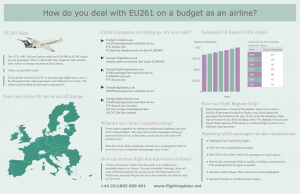
Image source: Bing (Web (fair-use with source credit))
Canada’s Air Passenger Protection Regulations (APPR) are closer to the US 3-3-3 rule, but with added compensation requirements. APPR sets a 3-hour tarmac limit for domestic Canadian flights, 4 hours for international, and requires airlines to pay CAD $400 to $700 in compensation for delays within the airline’s control, including tarmac delays. The US 3-3-3 rule has no mandatory cash compensation for tarmac delays, only the right to deplane once the threshold is hit.
For non-US carriers operating outside US airspace, the 3-3-3 rule almost never applies, so you’ll need to research local passenger rights before you travel.
Expert Tips to Use the 3-3-3 Rule to Your Advantage
Always review your airline’s contract of carriage before your flight. Most airlines publish their tarmac delay policies online, and many have more generous terms than the DOT minimum, like free meals or hotel stays for qualifying delays. If you have a documented medical condition that could be worsened by a tarmac hold, notify the gate agent and flight attendants as soon as you board.
This creates a paper trail that can help if you need to file a complaint later.
Pack a small carry-on with snacks, water, and a portable charger, even for short flights. Airlines aren’t required to provide food or charging outlets during tarmac delays, so you’ll avoid unnecessary discomfort if you’re stuck for hours. If the airline offers you a travel voucher or credit for a tarmac delay, don’t feel pressured to accept it immediately.
You can take the voucher and still file a DOT complaint if you believe the airline violated the rule.
For family travelers, packing essentials for kids during delays can make a 3-hour hold far less stressful. If you’re a frequent flyer, reference the 3-3-3 rule politely when speaking to gate agents or customer service about delay-related rebooking. Most agents are familiar with the rule and will prioritize your request if you can show you know your rights.
Frequently Asked Questions About the 3-3-3 Flight Rule
Does the 3-3-3 rule apply to international flights?
The rule applies to international flights only if they are operated by a US-registered carrier. These flights have a 4-hour tarmac limit, not 3 hours. Non-US carriers operating outside US airspace are not subject to the rule, even if their flight is bound for a US airport.
Foreign carriers operating at US airports must follow the 3-3-3 standard regardless of their home country.
Do I get cash compensation if an airline violates the 3-3-3 rule?
No, the 3-3-3 rule does not mandate cash compensation for tarmac delays. You can file a DOT complaint that may lead to fines for the airline, but those penalties go to the US Treasury, not affected passengers. Many airlines offer travel vouchers or credits as goodwill gestures for violations, but this is not a legal requirement.
What counts as a valid exception to the 3-3-3 rule?
Valid exceptions are limited to active safety risks, security threats, or FAA air traffic control restrictions. Severe weather, runway incursions, or suspicious airport security incidents qualify. Mechanical delays, crew scheduling issues, and missed connections do not count as valid exceptions, even if the airline cites them as a reason for holding the plane.
Can I sue an airline for violating the 3-3-3 rule?
The 3-3-3 rule does not grant passengers a private right to sue for damages in most cases. You can file a free complaint with the DOT Aviation Consumer Protection Division, which may investigate and issue fines to the airline. If you incurred extra costs due to the violation, you can request reimbursement directly from the airline, though this is not required under the rule.