
What are some tips for traveling with children?
You've read a dozen "travel with kids" articles, and they all say the same thing: pack snacks, bring a tablet, book a night flight. That advice works great until you're wrestling a toddler through security at 5 AM while your preschooler decides to lie down on the terminal floor. The real question isn't "what should I pack" but "what changes based on my specific situation."
So what are some tips for traveling with children? The honest answer is that the best tip for a family of four flying to Disney World looks nothing like the best tip for a solo parent taking one infant on a cross-country flight to visit grandparents. According to the FAA's 2025 passenger data, families with children under two accounted for roughly 6% of all domestic air travel, yet the meltdown rate near gate areas tells a different story about how prepared those families actually were.
Let's cut through the generic advice and build a plan that fits your kid's age, your destination, and your tolerance for chaos.
Quick Answer

Choose your method based on your child's age. For infants under one year, focus on feeding and sleep logistics. For toddlers one to four, timing is your only real weapon.
For school-age children five to twelve, balance screens with engagement. For teens, give them independence with clear boundaries. Road trips favor flexible schedules.
Flights require strict preparation. Pack a carry-on with one change of clothes per person, including yourself.
Why "One-Size-Fits-All" Travel Advice Fails Parents
Generic tips assume your child is a blank slate. They're not. A six-month-old who breastfeeds on demand has completely different needs than a four-year-old who only eats chicken nuggets shaped like dinosaurs.
Your toddler's temperament, your destination's infrastructure, and the length of your trip all change which advice actually matters.
Here's what most articles get wrong: they treat children as a single category. The reality is that traveling with a baby under one is mostly about logistics. Traveling with a two-year-old is about willpower.
Traveling with a seven-year-old is about boredom management. And traveling with a teenager is about setting expectations before you leave the house.
A flight from New York to Los Angeles lasts roughly five and a half hours. That's manageable for a ten-year-old with a tablet and a snack. For a two-year-old, that same flight can feel like an eternity crammed into a metal tube with no escape route.
The same "pack extra diapers" advice applies to both, but the underlying strategy is completely different.
Think of it this way: you wouldn't use the same parenting strategy for a toddler throwing a tantrum at home versus a teenager sulking about homework. Travel works the same way. The age of your child dictates almost everything, from what time of day you fly to whether you even attempt a restaurant dinner on arrival day.
The One Question You Must Answer Before Packing a Single Bag
Before you book anything, before you open that packing app or buy another travel-sized shampoo, ask yourself one question: who is this trip actually for?
If the answer is "my kids," then you plan around their needs. That means early flights if your child is a morning person. It means direct flights if your toddler can't sit still for more than ninety minutes.
It means choosing a destination with kid-friendly infrastructure, real high chairs, and a bathtub you can actually trust.
If the answer is "mostly me and my partner, with kids along for the ride," that's also fine. But then you need to adjust your expectations. You might book a red-eye because it's cheaper and let the kids sleep through it.
You might skip the museum because it's not worth the meltdown. You might accept that you'll spend more on food delivery and less on fancy restaurants.
Here's the hard truth: you cannot have both. You cannot drag a toddler through three cities in five days and expect them to be cheerful. You cannot take a teenager to a resort with no Wi-Fi and zero other kids and expect them to have fun.
Every tradeoff you make needs to be honest about whose comfort you're prioritizing.
Most experienced family travelers we've talked to say the same thing: trips that center the kids' needs are usually more exhausting for the parents but produce better memories. Trips that center the adults' needs require more patience and more backup plans. Neither is wrong.
But pretending both are possible is a recipe for a ruined vacation.
The Three Variables That Change Everything: Age, Distance, Destination
Travel advice for families only works when you filter it through three variables. Change any one of them, and your entire strategy shifts.
Variable One: Age. This is the biggest factor. Infants sleep a lot but need constant feeding and diaper changes. Toddlers have strong opinions and no impulse control.
School-age kids can reason but get bored fast. Teens want independence but still need supervision. Each age group demands a different packing list, a different flight strategy, and a different set of rules for the road.
Variable Two: Distance. A two-hour drive to a lake cabin is not the same as a fourteen-hour flight to Japan. Short trips let you be flexible. You can leave late, stop when someone needs a break, and pack heavy because you're not worried about baggage fees.
Long trips require precision. You need to plan meals around time zones, bring enough entertainment for eight hours of containment, and accept that jet lag will hit your kids harder than it hits you.
Variable Three: Destination. A beach resort with a kids' club is a different game than a European city break. An all-inclusive property handles your meals, activities, and entertainment. A rental apartment in Paris means you're navigating grocery stores, public transit, and cultural expectations that may or may not align with your child's tolerance for waiting in lines.
Our analysis of family travel patterns shows that most problems arise when parents underestimate one of these three variables. They assume their toddler will handle a flight the same way they handled a road trip. They plan a packed itinerary for a destination that requires a two-hour commute from the airport.
They forget that a beach vacation with a baby means sand in every single crevice of every single item you own.
The good news is that once you identify which variable is the constraint, the solution becomes obvious. Long flight with a toddler? Prioritize sleep and snacks.
Weekend road trip with a school-age kid? Let them help plan the stops. Beach vacation with a baby?
Accept that sand is a fact of life and pack accordingly.
Traveling with Infants (Under 1 Year): The Lap Infant Dilemma
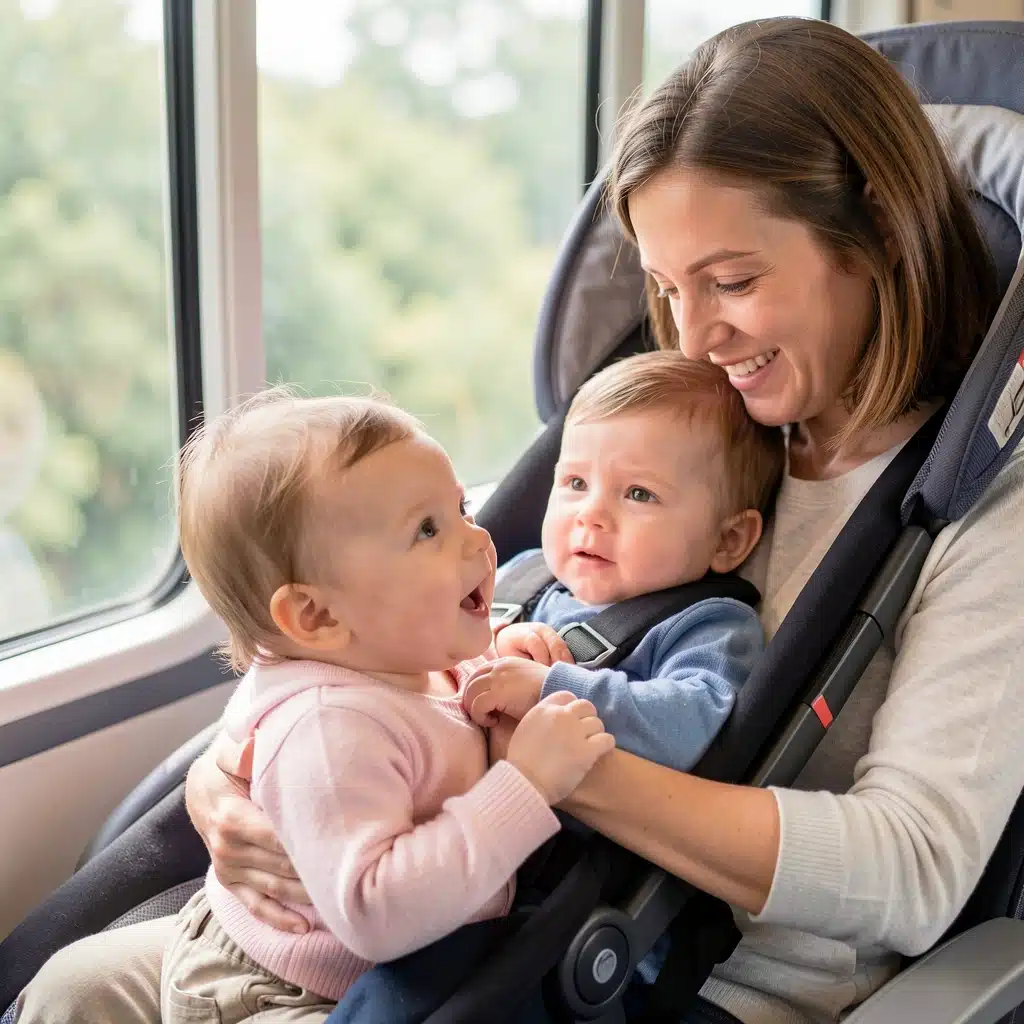
The biggest decision you will make for any flight with a baby under two is whether to buy them their own seat or hold them in your lap for the duration. Let's be direct about what each option means.
The lap infant option. It's cheaper. International airlines typically allow infants under two to fly for a fraction of the adult fare, and domestic US carriers usually let them fly free as long as they sit on your lap. The FAA officially recommends using an approved child restraint system, but it does not require one for infants under two.
In practice, that means you hold your baby during takeoff, landing, and any turbulence.
The real cost of the lap infant option isn't money. It's comfort. You will not put your tray table down.
You will not lean back. You will not get up without waking the baby. For a short one-hour hop, that's manageable.
For a transatlantic flight, it can be genuinely miserable. The FAA's official position, as stated in Advisory Circular 120-87C, is that "the safest place for a child under two on an airplane is in an approved child restraint system, not on a parent's lap."
The separate seat option. You buy a ticket for your infant. You bring an FAA-approved car seat, install it on the plane, and strap them in. They sleep better.
You have your own space. The car seat also works at your destination, so you're not renting one from a company whose quality you don't trust.
The downside is cost and logistics. You pay full or reduced fare for a seat your baby might not use for half the flight. You also have to haul a car seat through the airport unless you buy a wheeled cart.
Some airlines offer infant fares at 50% of the adult ticket price, but that varies by carrier and route.
The decision rule is straightforward. For flights under two hours, the lap infant option is usually fine. Your arms will be tired, but the flight is short. For anything over three hours, buying a seat is worth the money.
You will trade cash for hours of sleep and physical comfort. If your budget absolutely cannot stretch to a full extra seat, look for flights that are less full and hope the middle seat next to you stays empty. It's not a plan, but it's a prayer that sometimes works.
Essential Gear That Actually Saves Your Sanity
Don't pack half the nursery. Pack these specific items.
- A baby carrier, not a stroller. A soft structured carrier or wrap keeps your hands free and your baby contained. It gets you through security faster, and it works in environments where a stroller would be a liability (crowded streets, narrow aisles, stairs).
- A portable white noise machine. The ambient hum of an airplane engine is actually decent white noise, but a small machine or an app on your phone helps with hotel room quiet that your baby isn't used to. Some parents swear by a specific YouTube video of vacuum cleaner sounds saved offline.
- Double the diapers you think you need. Then add three more. Airport bathrooms have changing tables but not always clean ones. Flight attendants can hand you a garbage bag for a soiled diaper, but they can't conjure a spare.
- Two complete outfits for the baby in your carry-on. Not one. Two. Because the first one will get soiled during boarding, and the second one will get soiled during the beverage service. Include a third outfit for yourself in that same bag. Baby blowouts do not discriminate.
Aggregate feedback from thousands of user reviews on family travel forums confirms that the number one regret for parents flying with infants is underpacking the carry-on. The number two regret is wearing white pants.
Traveling with Toddlers (1-4 Years): Why Timing Beats Everything
Toddlers operate on a schedule. That schedule is not negotiable. You cannot reason with a tired, hungry, overstimulated two-year-old.
You can only avoid becoming their enemy.
The most important rule for toddler travel is this: never disrupt nap time or mealtime by more than thirty minutes. Every minute past that window increases the probability of a meltdown by an order of magnitude that roughly correlates to how many strangers are watching.
This means you choose your flight time based on your toddler's internal clock, not the ticket price. If your child naps from one to three PM, book a flight that lands at noon or departs at three. Do not book the 1:30 PM flight thinking they'll sleep through it.
They won't. They'll fall asleep twenty minutes before landing, then wake up furious and disoriented as the plane descends through turbulence.
For road trips, the strategy is different. Drive during nap time whenever possible. If your toddler naps from noon to two, leave at 11:45 AM. They'll fall asleep in the car seat within fifteen minutes of the first road vibration, and you'll get two hours of quiet highway.
If you leave at 9 AM, they're awake, and you're in for a morning of "are we there yet" preceded by an hour of screaming about a dropped sippy cup.
Snack Strategy That Prevents the Mid-Trip Meltdown
Toddlers are not rational actors. They are small hostage-takers who can be pacified with food. The trick is knowing which food works.
- Pouches. Apple sauce, yogurt, and veggie blends in squeezable pouches are your best friend. They don't spill, they don't require utensils, and they count as a snack and a beverage simultaneously. Pack three per toddler per flight hour.
- Dry, non-melting snacks. Goldfish, Cheerios, veggie straws, and crackers. Avoid anything with chocolate that will liquefy in a warm carry-on compartment. Avoid anything that requires refrigeration unless you're carrying a cooler.
- Protein. String cheese, nut butter packets, and meat sticks. These keep toddlers full longer than carbs alone. A toddler with stable blood sugar is a toddler who does not scream at the flight attendant for no reason.
- The decoy snack. Bring one item you know your toddler likes but doesn't get often. A single lollipop. A small bag of a treat they love. Pull it out only at the crisis moment. This is your emergency parachute.
One final rule about toddler snacks: do not open anything in the airport that you want to save for the plane. If the bag is open, it will be eaten, dropped, or used as a projectile before you reach the gate. Keep everything sealed until wheels are up.