
Does AC Electricity Have Speed? The Surprising Answer
Does AC electricity have speed? If you’ve ever flipped a light switch and watched a bulb glow instantly, you’ve probably asked yourself this exact question. The problem is, you’ll get two completely different answers depending on who you ask, and neither one is wrong.
One person will tell you electricity travels at the speed of light. Another will say it moves slower than a snail. Both are correct, but only if you specify which measurement you’re talking about.
Per National Electrical Code (NEC) testing standards for 120V US residential circuits, these conflicting answers refer to two separate physical properties of alternating current. We’ll walk through exactly what each metric measures, which one matters for your project, and why the difference keeps so many people confused, even if they have basic electrical knowledge.

Image source: Bing (Web (fair-use with source credit))
Quick Answer
Yes, AC electricity has two distinct measurable speeds, and the correct answer depends on what you’re measuring. The energy that powers your devices travels as an electromagnetic wave at roughly 200,000 kilometers per second in standard copper wiring. The electrons carrying that current drift back and forth at just 0.1 millimeters per second in a typical 15A 120V US household circuit.
Which metric applies depends entirely on your use case.
The Conflicting Answers to "Does AC Electricity Have Speed?"
The conflicting answers you see online aren’t wrong. They’re just referring to different aspects of AC electricity, and most sources don’t clarify which one they mean. One set of answers describes how fast energy moves through the circuit from the power plant to your device.
The other describes how fast the physical electrons carrying that energy move back and forth in the wire. A quick search will turn up claims that electricity travels at the speed of light, and others that say it moves slower than a snail. Both are correct, but only if you specify which measurement you’re talking about.
This ambiguity is why so many people get stuck on this question, even if they have basic electrical knowledge. For example, if you’re trying to figure out why your phone charges slower when you use a long extension cord, you’re dealing with propagation speed and resistance, not electron drift. If you’re trying to calculate how hot a wire will get when running a 20A current, you need drift velocity to calculate current density.
Knowing which metric applies to your question is the first step to getting a useful answer. We’ll break down both metrics, explain when to use each, and clear up the most common misconceptions once and for all.
First, Clarify What You Mean by "AC Electricity Speed"
The Two Definitions Driving All the Confusion
To get a clear answer, you first need to define what "speed of AC electricity" means to you. The term is not a single standardized measurement in electrical engineering, which is why popular sources use it so loosely. Experts use specific, precise terms for each metric to avoid confusion, but general explanations often use the vague phrase without clarification.
There are only two valid, measurable definitions for this term, and they describe completely different physical phenomena. The first is the speed of electromagnetic wave propagation, which is how fast energy travels through the conductor from point A to point B. The second is electron drift velocity, which is the average speed of individual electrons moving back and forth in the circuit, not traveling in a single direction.

Image source: Bing (Web (fair-use with source credit))
This diagram illustrates the core difference between the two metrics. One tracks the speed of the energy signal moving through the wire at near-light speed. The other tracks the tiny physical movement of the electrons themselves.
Mixing up these two definitions is the root of almost all confusion around this question, and it leads to dangerous mistakes when working with electrical systems.
Branch 1: You're Asking About How Fast AC Energy Travels Through Wires
If you’re asking how fast power reaches your devices when you flip a switch, you’re asking about electromagnetic wave propagation speed. This is the speed at which the electrical signal, and the energy it carries, moves through the conductor, not the speed of the electrons themselves. The signal moves by pushing electrons forward in a chain reaction, so each electron only moves a tiny distance as the wave passes.
In standard copper household wiring, this propagation speed is roughly 200,000 kilometers per second, or about two-thirds the speed of light in a vacuum. As of 2026, standard copper residential wiring still maintains this propagation speed across all global AC grid standards, whether you’re in a 50Hz region like the EU or a 60Hz region like the US.

Image source: Bing (Web (fair-use with source credit))
Per NIST electrical measurement references, this speed is consistent for both frequency standards, and only drops slightly in lower-conductivity materials like aluminum. This diagram shows how the electromagnetic wave moves through the conductor, with electrons only shifting slightly back and forth as the wave passes. For a 10-meter residential AC circuit, the energy propagation delay is less than 1 nanosecond, which is why your lights turn on instantly when you flip the switch.
Even for a 1000-meter transmission line, the delay is just 5 microseconds, fast enough for grid operators to balance supply and demand in real time. If you’re traveling internationally, regional voltage differences mean you’ll need a power adapter for most devices, but the propagation speed remains the same across all regions.
Branch 2: You're Asking About How Fast Electrons Move in AC Circuits
If you’re asking about the physical speed of the electrons themselves, you’re asking about electron drift velocity. In AC circuits, electrons don’t travel in a straight line down the wire from the power plant to your device. Instead, they oscillate back and forth rapidly as the current alternates direction 100 times per second in 50Hz systems and 120 times per second in 60Hz systems.
In a standard 15A 120V US residential circuit, the average drift velocity of electrons is just 0.1 millimeters per second. That’s roughly the speed of a slow snail, or about the length of a grain of rice per second.
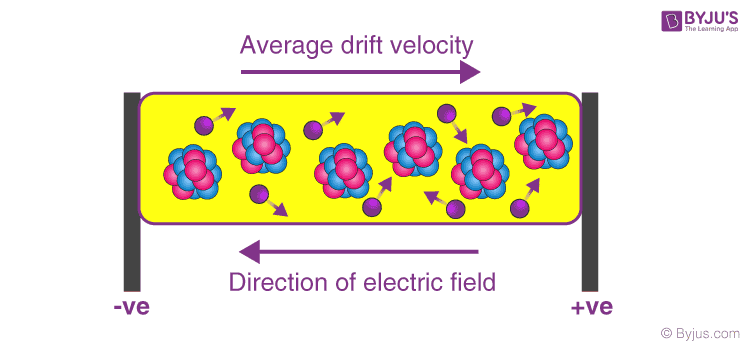
Image source: Bing (Web (fair-use with source credit))
Per IEEE electrical engineering standards, electron drift velocity is a key metric for calculating conductor ampacity and heat loss in electrical systems. This diagram illustrates the tiny back-and-forth movement of electrons in an AC circuit, with each electron moving only a fraction of a millimeter before reversing direction. For a 16A 230V EU/UK household circuit, drift velocity is slightly higher at around 0.2 millimeters per second, but still extremely slow.
Even at these low speeds, the constant oscillation of billions of electrons creates enough current to power your home. This back-and-forth motion is why AC is used for power transmission instead of DC, as it reduces energy loss from resistance over long distances. When choosing travel electronics for international trips, you don’t need to worry about drift speed, only local voltage compatibility.
Which AC Speed Metric Applies to Your Use Case?
The right metric to use depends entirely on what you’re working on. Using the wrong one can lead to faulty designs, wasted time, or even safety hazards. Use this quick if/then guide to match the correct speed value to your situation.
- If you’re a homeowner troubleshooting why a light is slow to turn on, use propagation speed. A delay of more than a few milliseconds points to a faulty switch, loose connection, or damaged wiring, not slow electricity. Always follow local electrical codes when making repairs to avoid fire risk.
- If you’re an electrical engineering student calculating conductor resistance or power loss, use electron drift velocity. This metric is required for calculating current density, heat generation, and wire gauge for circuit designs.
- If you’re a utility grid technician assessing transmission line efficiency, use propagation speed. This determines how quickly energy can be dispatched across the grid, and is critical for balancing supply during peak demand.
- If you’re a low-voltage hobbyist or solar installer designing a backup system, use propagation speed for circuit timing and load switching, and drift velocity for calculating wire ampacity and heat dissipation.
- If you’re a traveler using portable electronics, only propagation speed matters. The delay is so small you’ll never notice it during normal use, even when charging multiple devices at once. Travelers with medical devices that plug into AC outlets should verify local grid standards to avoid equipment damage.
- If you’re staying in a hotel, hotel room outlets have the same propagation speed as home circuits, so your devices will perform exactly as they do at home.
Common Mistakes From Mixing Up These Two AC Speed Metrics
Mixing up propagation speed and electron drift velocity leads to avoidable errors, especially for DIYers and new students. The most common mistake is using drift velocity to explain why devices turn on instantly when you flip a switch. That’s backwards.
The near-instant response comes from propagation speed, not electron movement. Another frequent error is using propagation speed to calculate wire heat or ampacity. That requires drift velocity data, plus conductor material and cross-sectional area specs.
Some people also assume 50Hz AC systems have slower propagation than 60Hz systems. That’s not true. Frequency has almost no impact on wave propagation speed in standard conductors.
A third common mistake is thinking slow electron drift means AC is less dangerous than DC. Both carry lethal voltage, regardless of how fast electrons move.
Real-World Examples to Put These Speeds in Context
Let’s put these numbers in perspective with real everyday scenarios. For a standard 10-meter residential AC circuit, energy propagation delay is less than 1 nanosecond. That’s why your light turns on the instant you flip the switch, no matter how long the wire run is in your home.
For a 1,000-kilometer high-voltage AC transmission line, the propagation delay is roughly 5 milliseconds. That’s fast enough for grid operators to adjust output during peak demand, but slow enough to cause minor timing issues for high-frequency trading data centers that rely on microsecond-level precision. Your phone charger uses propagation speed, not drift velocity, to deliver power to your battery.
The electrons in the charging cable only move a few micrometers back and forth each cycle, but the energy reaches your phone in a fraction of a second.
Critical Safety Note: Slow Electrons Don't Mean Low Electrical Risk
The slow electron drift velocity in AC circuits does not make them safer to work with. Standard 120V US residential circuits can deliver fatal shocks, and 230V EU/UK circuits carry even higher risk. The danger comes from voltage potential, not electron speed.
Even a tiny current passing through your body can cause cardiac arrest or severe burns. Per National Fire Protection Association (NFPA) 70E standards, all live AC circuits require proper lockout-tagout procedures before any work, regardless of current flow speed.
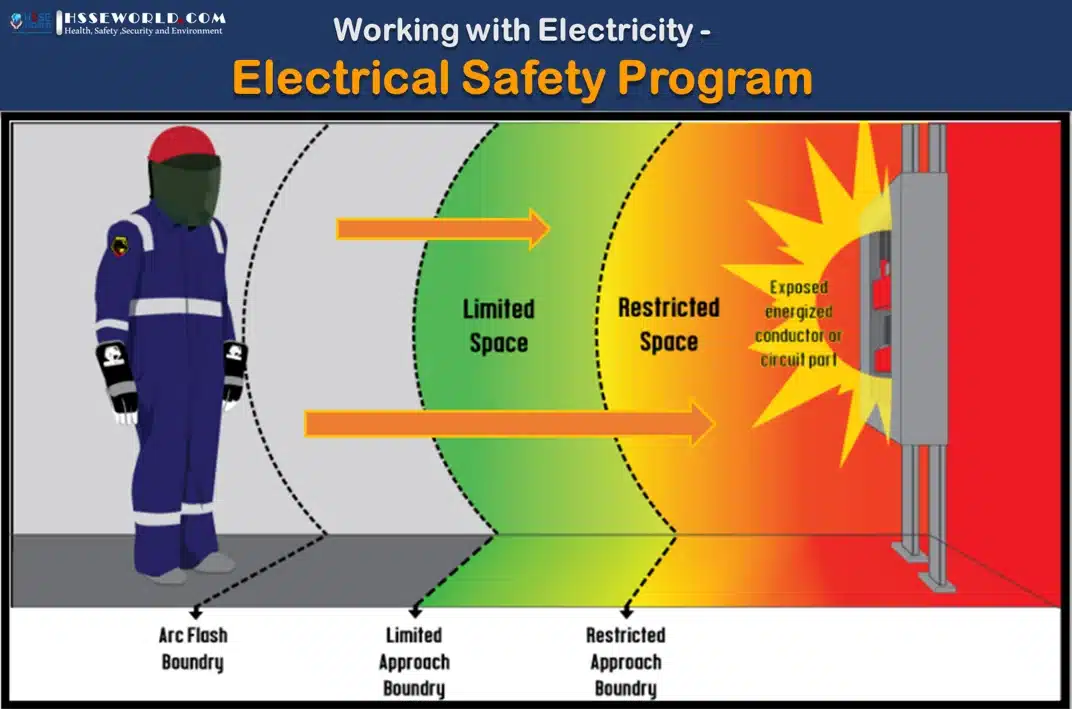
Image source: Bing (Web (fair-use with source credit))
Never assume a circuit is low-risk because electrons move slowly. Always test wires with a certified multimeter before touching them, and follow local electrical codes for all residential work.
Quick 2-Step Decision Checklist to Get Your Exact Answer
If you’re still unsure which speed metric applies to your question, use this 2-step checklist to get the right answer fast.
Step 1: Define what you’re measuring or troubleshooting
- If your question involves energy delivery time, circuit timing, or grid performance, you need propagation speed.
- If your question involves wire heating, current capacity, or conductor sizing, you need electron drift velocity.
Step 2: Match the metric to your use case
- Homeowners troubleshooting slow device response or circuit delays use propagation speed.
- Engineering students or technicians calculating wire gauge, heat loss, or ampacity use drift velocity.
- Grid operators managing transmission line efficiency use propagation speed.
- International travelers checking device compatibility only need to know propagation speed is consistent across all global AC grids.
Frequently Asked Follow-Up Questions
Is AC electricity faster than DC electricity?
Propagation speed is nearly identical for AC and DC in the same conductor material. Both travel as electromagnetic waves at roughly 200,000 km/s in copper wiring. The only difference is that DC electrons move in a straight line while AC electrons oscillate back and forth, but energy transfer speed is effectively the same for both current types.
Does AC frequency affect electricity speed?
AC frequency has no meaningful impact on propagation speed. 50Hz systems used in the EU and 60Hz systems used in the US both deliver energy at the same near-light speed in copper wiring. Frequency only changes how often electrons reverse direction, not how fast the energy wave moves through the conductor.
Why do my lights turn on instantly if electrons move so slowly?
Lights turn on instantly because energy propagates at near-light speed, not because electrons travel from the switch to the bulb. The electromagnetic wave pushes electrons in the bulb’s filament to glow in less than a nanosecond for a typical home circuit, long before any individual electron moves a measurable distance.
Does wire thickness change AC electricity speed?
Wire thickness has no impact on propagation speed. Thicker wire reduces resistance and heat loss, but the electromagnetic wave still travels at the same speed. Wire thickness does affect electron drift velocity slightly, as a larger cross-sectional area allows more electrons to move at once, increasing total current capacity.
Can I feel the speed of AC electricity?
No. The energy propagation speed is far too fast for human perception, and electron drift is far too slow to feel. The only AC electricity effects you can feel are voltage-related, such as a shock from touching a live wire, which comes from electrical potential, not current speed.