

What Countries are Not Safe to Travel: Avoid These Risks
Imagine planning your dream vacation, only to find out that your chosen destination isn’t as safe as you thought. Safety is a crucial aspect of travel that you can’t afford to overlook.
Whether you’re an adventurous backpacker or a family vacationer, knowing which countries pose risks can save you from unwanted surprises. This guide will empower you with essential information, ensuring your travels are safe and enjoyable. Don’t leave your safety to chance—discover the countries that may not be safe to travel to and why you should stay informed.
Your peace of mind starts here. Ready to make informed choices? Keep reading!
Global Travel Advisories
When planning a trip, knowing which countries are safe to visit is crucial. Global travel advisories provide valuable insights to help you make informed decisions. These advisories consider factors like political instability, health risks, and crime rates.
By staying updated with these advisories, you can avoid potential dangers and ensure a smooth journey. But have you ever wondered how these advisories are crafted and what makes a country deemed unsafe? Let’s explore.
Global Travel Advisories Explained
Travel advisories are often issued by government bodies, such as the U.S. Department of State or the UK Foreign Office. They assess risks and provide safety ratings for destinations worldwide.
These advisories are updated frequently to reflect changing situations, offering a real-time safety snapshot. If you’re considering travel, consulting these advisories is a smart move.
Countries With Political Instability
Some countries experience ongoing political unrest, making them risky travel destinations. For instance, regions with frequent protests or government upheavals often see travel warnings.
In 2023, countries like Syria and Afghanistan continue to face significant political instability. Would you feel comfortable visiting a place where safety cannot be guaranteed?
Health Risks In Certain Regions
Health risks are another factor influencing travel advisories. Countries facing outbreaks of diseases like Ebola or Zika might be labeled unsafe.
Imagine planning a vacation only to end up in a region where a health crisis is unfolding. Always check health advisories to avoid such surprises.
Crime Rates And Safety Concerns
High crime rates can deter tourists from visiting certain areas. Countries with prevalent theft, kidnapping, or violence are often marked as unsafe.
Brazil and Mexico, while popular, have areas with high crime rates. Would you feel at ease knowing your safety might be compromised?
Personal Experiences: Staying Safe
On a trip to a country with a travel advisory, I found local advice invaluable. Engaging with locals can offer insights beyond official warnings.
They can guide you on safe routes and areas to avoid, enhancing your travel experience. Have you ever relied on local advice during your travels?
Staying Informed: Practical Tips
Use official government websites to check travel advisories before booking your trip. Sign up for alerts to stay updated with changes.
Consider travel insurance to cover unforeseen situations and ensure peace of mind. How do you prepare for unexpected challenges while traveling?
Remember, safety should always be your priority. Planning ahead and staying informed can make all the difference in your travel experience.

Credit: www.reddit.com
Understanding Safety Concerns
Traveling requires awareness of safety concerns. Some countries face issues like political unrest or high crime rates. It’s essential to research and stay informed about regions with potential risks before planning your trip.
Understanding safety concerns is crucial when planning your travels. Every destination has its unique set of risks. Awareness and preparation can make all the difference in ensuring a safe and enjoyable trip.
Understanding Local Politics
Political instability can drastically affect your safety. In some countries, protests and demonstrations may turn violent without warning. For instance, a friend of mine once visited a country during an election period and found themselves caught in a sudden protest. Always check the political climate before you travel. Be wary of travel advisories issued by your government.
Crime Rates And Types
Crime is a concern in many travel destinations. Some areas are notorious for pickpocketing, while others have higher rates of violent crime. Researching crime statistics can help you understand what to watch out for. Use resources like travel forums to gather firsthand experiences from other travelers.
Health Risks And Accessibility
Health risks vary from country to country. Some regions have outbreaks of diseases like malaria or dengue fever. Consider the availability of healthcare facilities too. On a trip to a remote area, you might find hospitals far and few between. Carry necessary medications and check if you need vaccinations before departure.
Cultural Sensitivities
Respecting local customs is not just polite—it can affect your safety. In some cultures, certain behaviors might be offensive or even illegal. Research dress codes, social norms, and local laws. A small cultural misstep might lead to unintended trouble.
Natural Disasters
Natural disasters can occur with little notice. Some countries are more prone to earthquakes, hurricanes, or floods. Check weather patterns and seasonal risks before you book your trip. Having a plan for emergencies can alleviate some of the stress if disaster strikes. Your safety should be a top priority. What steps will you take to ensure your travels are not only adventurous but secure?
Regions With Political Instability
Traveling to regions with political instability can pose serious risks. These areas may experience frequent protests, violence, or governmental unrest. Such factors can disrupt travel plans and even threaten personal safety. Understanding which countries face political challenges is crucial for travelers seeking security.
Middle East Tensions
The Middle East often faces conflicts and political unrest. Countries like Syria and Yemen are known for ongoing wars. These conflicts have led to unsafe conditions for visitors. Iraq also experiences frequent political instability, making it a risky destination.
African Political Unrest
Several African nations struggle with political issues. Sudan and South Sudan have histories of conflict and civil unrest. Travelers should be cautious when considering visits to these areas. The Central African Republic also faces political violence, posing dangers for tourists.
Latin American Instability
Latin America has regions with governmental instability. Venezuela is notable for its economic crisis and political tension. Such instability can lead to unsafe conditions for travelers. Honduras often experiences crime and political unrest, requiring caution.
Asian Political Challenges
Some Asian countries face political difficulties. Afghanistan has long been a region of conflict and instability. Myanmar has seen political turmoil affecting safety. These conditions make travel risky in these areas.
Credit: theswiftest.com
Countries With High Crime Rates
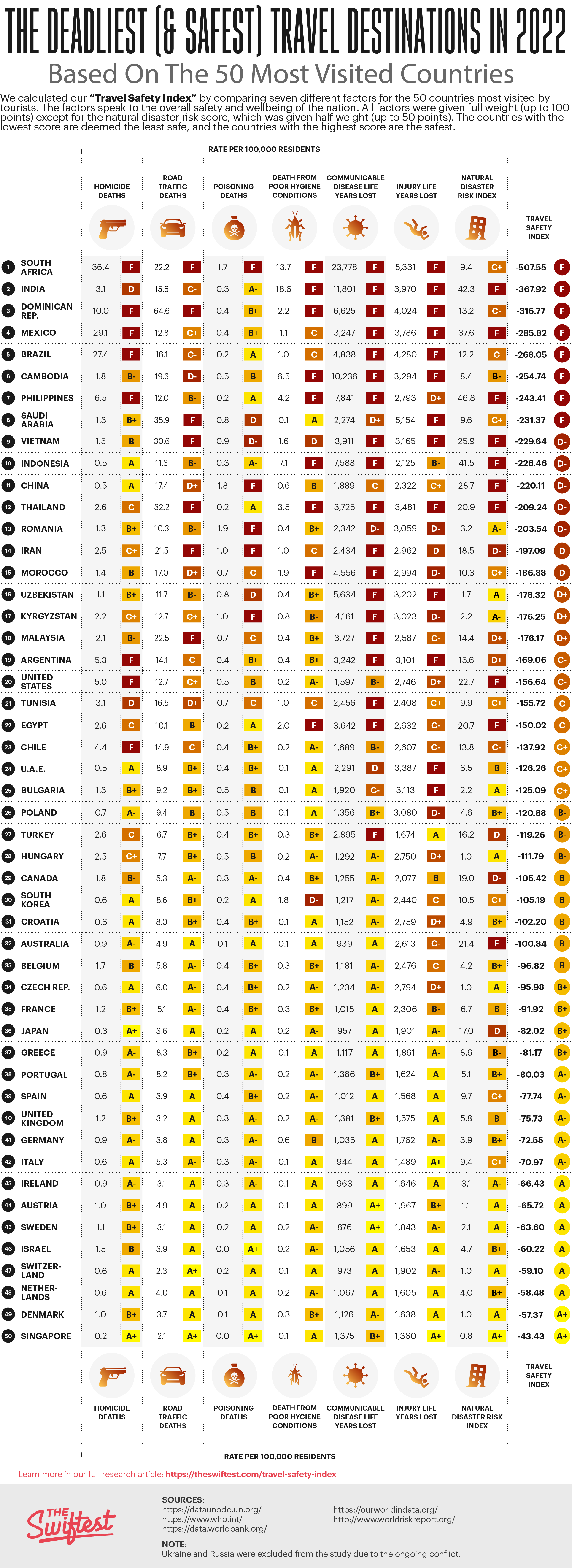
Traveling opens doors to new experiences and cultures. Yet, safety must be a top priority. Certain countries have high crime rates, posing risks for travelers. Knowing these countries can help plan safer trips.
Brazil
Brazil offers stunning beaches and vibrant cities. Crime rates are high, especially in urban areas. Pickpocketing and robberies are common. Travelers should stay cautious, especially at night.
Venezuela
Venezuela faces economic challenges and political unrest. This leads to increased crime rates. Violent crimes and kidnappings are reported often. Tourists should avoid traveling here for safety reasons.
South Africa
South Africa has beautiful landscapes and wildlife. Crime rates are high in cities. Muggings and car hijackings are frequent. Travelers should avoid certain neighborhoods.
Mexico
Mexico is known for its rich history and culture. Some areas have high crime rates due to drug cartels. Robberies and violent crimes can occur. Travelers should research safe zones before visiting.
Honduras
Honduras attracts tourists with its natural beauty. High crime rates can be a concern. Gang violence and theft are common. Visitors should remain vigilant at all times.
Jamaica
Jamaica is famous for reggae and beaches. Crime rates are high in certain areas. Tourists face risks of theft and violence. It’s wise to stay in secure resorts.
Colombia
Colombia boasts breathtaking landscapes and coffee. Crime rates are improving but still high. Kidnappings and drug-related crimes are concerns. Travelers should stay informed and cautious.
Areas Prone To Natural Disasters
Traveling is an exciting venture, but safety is paramount. Some countries face natural disasters that pose significant risks. Understanding these areas helps in making informed travel decisions. This section explores regions vulnerable to nature’s unpredictable forces.
Earthquake Zones
Earthquakes can occur without warning. Countries like Japan and Indonesia often experience them. These regions lie on tectonic plate boundaries. Buildings and infrastructure may not withstand severe tremors. Travelers should be aware of earthquake preparedness measures.
Volcanic Eruptions
Volcanoes can erupt suddenly, affecting air travel and health. Countries with active volcanoes include Italy and Iceland. Volcanic ash clouds disrupt flights and respiratory health. Monitoring volcanic activity is crucial before planning trips.
Flood-prone Areas
Floods can devastate communities, leading to displacement and health risks. Bangladesh and Vietnam frequently face severe flooding. Heavy rains and overflowing rivers cause widespread damage. Travelers should check weather forecasts and flood warnings.
Hurricane Zones
Hurricanes bring strong winds and heavy rains. The Caribbean and Gulf of Mexico are known hurricane zones. These storms can lead to evacuations and property damage. It’s vital to understand hurricane seasons and safety protocols.
Tornado-prone Regions
Tornadoes are fast-moving and destructive. The United States and Canada have regions prone to tornadoes. These storms can cause significant harm to people and property. Travelers should familiarize themselves with tornado alerts and safety shelters.

Credit: www.reddit.com
Health Risks In Certain Countries
Certain countries pose significant health risks for travelers. Factors like unstable political climates, poor sanitation, and high disease rates contribute to unsafe conditions. It’s crucial to stay informed about travel advisories and local health issues.
Traveling can be one of the most rewarding experiences, but it’s important to consider the health risks that might be present in certain countries. These risks can range from infectious diseases to food safety issues. Being informed can make your journey safer and more enjoyable.
Understanding Regional Health Risks
Different regions have different health challenges. In some countries, diseases like malaria and dengue fever are common. Are you aware that certain vaccines are recommended before traveling to these areas?
Access To Medical Facilities
Quality of healthcare varies worldwide. In some places, medical facilities may not meet the standards you’re accustomed to. Imagine needing urgent care and facing communication barriers or outdated equipment.
Food And Water Safety Concerns
Foodborne illnesses can ruin your trip. In many developing countries, tap water is not safe to drink. Have you thought about how to ensure your food and water are safe while traveling?
Personal Experience: A Lesson On Preparedness
I once traveled to a country with high rates of foodborne illness. I learned the hard way that a quick meal from a street vendor can lead to days of discomfort. Would you risk your health for a taste of local cuisine?
Practical Tips For Staying Healthy
Before you travel, check health advisories for your destination. Consider packing a basic first-aid kit and researching local healthcare facilities. How prepared are you for unexpected health challenges abroad? Being proactive about health risks can turn potential pitfalls into manageable obstacles. So, what steps will you take to protect your health on your next adventure?
Travel Restrictions And Warnings
Traveling opens doors to new experiences and cultures. Yet, safety remains a concern. Some countries face challenges that might affect travelers. These challenges lead to travel restrictions and warnings. Authorities issue these warnings for different reasons. They aim to protect travelers from potential risks.
Travel Restrictions: Understanding The Basics
Travel restrictions limit entry to certain countries. These restrictions can be temporary or long-term. Reasons include political unrest or health crises. Understanding these restrictions helps in planning safe trips.
Political Instability: A Major Concern
Countries with political unrest often face travel warnings. Protests or conflicts can erupt without warning. This poses risks to tourists and locals alike. Stay informed about the political climate before visiting.
Health Risks: An Important Factor
Some regions experience outbreaks of diseases. This leads to health-related travel warnings. Vaccinations and precautions are essential for travelers. Research health advisories before booking your trip.
Crime Rates: Staying Safe
High crime rates can affect travel safety. Petty theft or violent crime may be common. Travelers should be cautious in such regions. Check crime statistics and local advice before traveling.
Natural Disasters: Unpredictable Threats
Natural disasters can happen anywhere, anytime. Earthquakes, floods, or hurricanes may occur suddenly. These events can disrupt travel plans severely. Prepare for emergencies by checking weather forecasts.
Tips For Staying Safe Abroad
Traveling to new countries can be thrilling. But not all places are safe. It’s crucial to know how to stay safe abroad. Some countries may pose risks due to political unrest or crime. Here are some tips to help you navigate safely.
Research Local Laws And Customs
Study the laws of the country before you travel. Some actions might be legal at home but illegal abroad. Respect local customs and traditions. This helps you avoid misunderstandings.
Keep Important Documents Safe
Carry copies of your passport and visa. Store the originals in a secure place. Use hotel safes or locked luggage. Losing important documents can ruin your trip.
Stay Informed About Your Surroundings
Be aware of your environment at all times. Avoid areas known for crime or unrest. Stay updated with local news. This helps you make informed decisions.
Use Trusted Transportation
Choose reliable transport options. Use registered taxis or rideshare apps. Avoid hitchhiking or unlicensed cabs. Safe transport reduces risk while traveling.
Limit Sharing Personal Information
Be cautious with your personal data. Avoid sharing too much with strangers. Use privacy settings on social media. Protect your identity while abroad.
Have Emergency Contacts Ready
Keep a list of emergency numbers. Include local police and your embassy. Share these contacts with trusted friends. This ensures quick help if needed.
Reliable Sources For Travel Safety
Travel safety is a major concern for many. Knowing which countries are not safe is crucial. Reliable sources help travelers make informed decisions. These sources provide up-to-date information. They guide you in avoiding risky destinations. Let’s explore some dependable resources for travel safety.
1. U.S. Department of State Travel Advisories
The U.S. Department of State offers detailed travel advisories. These advisories cover safety conditions for every country. They categorize risks into four levels. Level one is the safest, while level four suggests avoiding travel. This resource updates frequently. It also provides advice on health and crime concerns.
The UK Foreign Travel Advice is another trustworthy source. It offers comprehensive travel guidance. The site provides information on local laws and customs. It also covers natural disasters and potential terrorist threats. The updates are timely, ensuring you have the latest news.
3. Government of Canada Travel Advice and Advisories
The Government of Canada provides travel advisories too. Their site offers risk levels for different countries. It includes health warnings and security concerns. The advice is clear and concise. This resource also gives tips for safe travel practices.
4. World Health Organization (WHO) Travel Advice
The WHO offers health-focused travel advice. It warns against outbreaks and health risks. This site is crucial for health-related travel safety. It provides guidelines on vaccinations and health measures. Staying updated with WHO ensures better health safety abroad.
5. Centers for Disease Control and Prevention (CDC) Travel Health Notices
The CDC provides health notices for travelers. These notices focus on disease risks in different regions. The resource is vital for understanding health precautions. It also offers tips on staying healthy while traveling. With CDC updates, you can prevent travel-related illnesses.
Frequently Asked Questions
Which Country Is Not Safe For Traveling?
Some countries may have safety concerns for travelers. Afghanistan, Syria, and Yemen are often listed as unsafe. It’s crucial to check government travel advisories for updated information before planning your trip. Always prioritize your safety while traveling abroad.
What Countries Are Avoided By The Us Security Clearance?
Countries avoided by US security clearance often include China, Russia, North Korea, Iran, and Syria. Restrictions may vary based on specific security guidelines and current geopolitical circumstances. Always consult the latest official guidance for accurate information on restricted countries.
What Is A Level 4 Travel Warning In The Usa?
A Level 4 travel warning in the USA advises against travel due to high risks. It indicates extreme danger from threats like terrorism, crime, or health issues. The State Department issues these warnings to prioritize safety for American travelers. Always check current advisories before planning trips abroad.
What Countries Are Restricted To Travel To The Us?
Certain countries face travel restrictions to the US due to security and immigration policies. Check the US Department of State website for the latest updates and specific countries affected by these restrictions. Travel bans may change, so staying informed is crucial for travelers.
Conclusion
Traveling involves risks. Some countries are less safe than others. Research thoroughly before planning a trip. Safety should be your top priority. Stay informed about current events. Check government travel advisories. Talk to locals or recent travelers. They offer valuable insights.
Avoid high-risk areas whenever possible. Always have a backup plan. Keep emergency contacts handy. Trust your instincts. If something feels wrong, leave. Your safety matters most. Travel can be enriching and fun. With the right precautions, you can explore confidently.
Enjoy your journeys wisely.


